Can I Recover More Than Insurance Policy Limits?
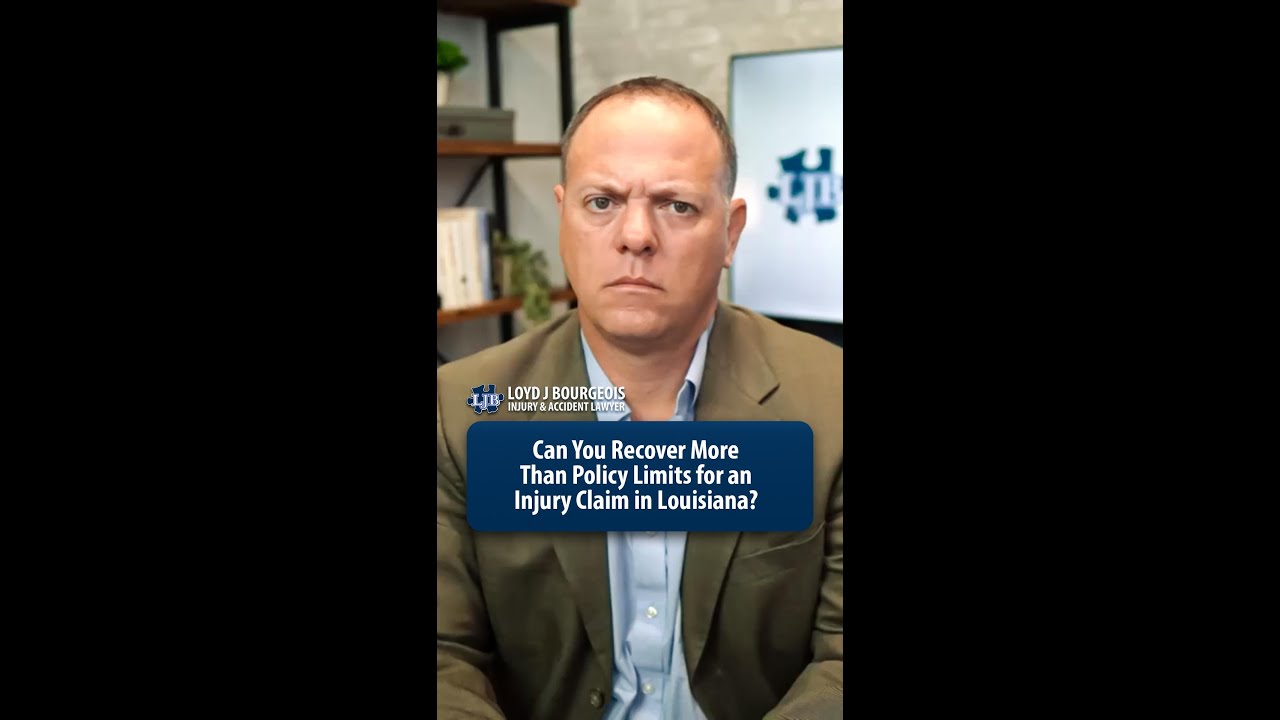
Yes, you can recover more than insurance policy limits in Louisiana under certain conditions. This includes suing the at-fault party for personal assets, filing a bad faith claim if the insurer acted unfairly, using your own UM coverage, or pursuing compensation from multiple liable parties, including potentially liable employers or entities responsible for negligent road construction or maintenance.
Legal guidance is essential to maximize recovery. Consult a Louisiana personal injury lawyer to explore your options.


We GET IT DONE
Clients trust us to handle their case properly and effectively
FREE Confidential Case Review (985) 240-9773What Happens When a Car Accident Claim Exceeds Insurance Limits in Louisiana?
When a car accident claim exceeds insurance limits in Louisiana, the at-fault driver’s insurer pays only up to the policy limit. To recover the rest, you can use underinsured motorist (UM) coverage, sue the driver personally for excess damages, or identify other liable parties.
After an accident, the road to recovery can be overwhelming, especially when the financial strain feels impossible to manage. Consider the stories of Jessica and Sarah (names changed for privacy), two people whose lives were forever changed by serious crashes.
Jessica was on her way to pick up her kids when another driver sped through a construction zone and collided with her car. The crash left her with severe injuries requiring multiple surgeries and long-term care. Her medical bills were skyrocketing, nearing $1 million, and she was unable to return to work. On top of that, the at-fault driver carried only the minimum insurance required in Louisiana and had no assets to cover the damages. Due to the low insurance policy limit, it seemed like Jessica was out of options, but she hired our office to investigate her case.
Through our investigation, we discovered that the construction zone had been poorly managed, with unclear signage and hazardous conditions that contributed to the crash. This allowed us to pursue a claim against the construction company. By holding them accountable, we recovered additional compensation to help Jessica with her medical bills and ongoing care.
Sarah’s story, however, shows how difficult things can be without additional options. She was driving home from work when a distracted driver ran a red light and hit her car. The collision left her with devastating spinal injuries and a need for lifetime care. Like Jessica, Sarah’s medical bills were nearing $1 million, and she hadn’t been able to work since the accident. Unfortunately, the at-fault driver in her case also had minimal insurance and no assets. Unlike Jessica, there was no third party, like a construction company, involved, and Sarah didn’t have uninsured/underinsured motorist (UM) coverage.
Her lawyer investigated every possible avenue, such as whether the insurance company acted in bad faith or if any other parties were liable, but in the end, no additional recovery sources could be found. Without UM coverage, Sarah faced the harsh reality that the available compensation wasn’t enough to meet her needs.
These stories highlight two important lessons. First, a skilled attorney can make a tremendous difference by investigating all potential sources of compensation. In cases like Jessica’s, that effort can uncover critical opportunities for recovery. Second, Sarah’s experience underscores how important it is to have UM coverage. Without it, you could be left with mounting bills and no way to pay for the care you need.
If you’re facing a similar situation, don’t assume you’re out of options. A knowledgeable legal team can help you explore every possibility to pursue the compensation you deserve.

We DO THE RIGHT THING
The correct choice – always – is to do the right thing.
FREE Confidential Case Review (985) 240-9773What Are Policy Limits in Louisiana and Why Do They Matter?
In Louisiana, when dealing with accidents and insurance claims, understanding policy limits is crucial. Policy limits dictate how much an insurance company will pay for a covered claim. This can greatly impact the compensation that injured parties, fault drivers, and other involved parties may receive.
Policy limits refer to the maximum amount an insurance carrier will pay on an insurance claim. These limits are set in the insurance policy when you purchase coverage. There are different types of policy limits: one for property damage, and others for bodily injury. For example, if a fault driver causes an accident, their liability insurer will cover damages only up to the policy limits specified in their insurance policy.
How Policy Limits Affect Claims
Policy limits play a significant role in how much compensation you can receive from an insurance claim. If your damages are greater than the policy limits, you may need to seek additional compensation through other means, such as:
- Underinsured Motorist Insurance Coverage: This may cover the gap if the at-fault party’s insurance is insufficient.
- Legal Action: This could involve hiring accident attorneys or a personal injury lawyer to pursue further compensation.
- Excess Insurance Policy: This can provide extra coverage beyond the primary policy limits.
It’s important for all parties involved, including at-fault parties and injured individuals, to be aware of these limits to understand potential outcomes. If an insurance claim exceeds the policy limits, accident lawyers often advise exploring other avenues. These could include exploring a direct action against the insurance company or seeking replacement costs from the at-fault party.
Settling for policy limits in Louisiana often means accepting the maximum payout from the insurer. But if the damages exceed those limits, consulting with legal professionals might be necessary to avoid receiving less than you deserve or engaging in a bad-faith lawsuit for bad-faith failure in dealing with your claim. Understanding the implications of policy limits can ensure fair settlement demands and protect against excess judgment scenarios.


We ARE TRANSPARENT
We don’t play games and we don’t hide the ball.
FREE Confidential Case Review (985) 240-9773What Other Ways Can I Recover Compensation If Policy Limits Are Too Low?
If damages exceed insurance limits, you can pursue compensation by filing a UIM claim, suing the at-fault driver personally, identifying other liable parties, or locating umbrella policies. Additional recovery may come from multiple policies or a bad-faith claim if the insurer mishandled the case. Prompt legal action is essential.
When an at-fault party’s insurance coverage doesn’t fully compensate for your injuries, it’s essential to explore other avenues for recovery. Here are steps to consider:
- Identify Additional Liable Parties:
- Third-Party Liability: Investigate whether other individuals or entities share responsibility for the accident. In a construction zone crash, a Louisiana Construction Zone Accident Lawyer may uncover liability tied to a construction company, contractor, or subcontractor for poor signage, unsafe lane shifts, or hazardous road conditions.
- Assess Employer Responsibility:
- Vicarious Liability: If the at-fault driver was working at the time of the crash, their employer may be financially responsible for your injuries and losses.
- Examine Product Liability:
- Defective Products: When a vehicle defect or equipment failure contributes to a construction zone accident, the manufacturer or distributor may be held liable.
- Review Your Insurance Policies:
- Uninsured/Underinsured Motorist (UM/UIM) Coverage: This coverage may help bridge the gap when the at-fault party’s insurance does not fully cover your damages.
- Investigate Potential Bad Faith Claims:
- Insurer’s Duty: Insurance companies must act fairly and honestly. If an insurer refuses to settle within policy limits without a valid reason, additional compensation may be available.
- Consider Legal Action Against the At-Fault Party:
- Personal Assets: In some cases, pursuing compensation beyond insurance through the at-fault party’s assets may be possible, though recovery depends on available resources.
- Check for Multiple Insurance Policies:
- Household Vehicle Coverage: The at-fault driver may have multiple vehicles or policies in their household, any of which could provide coverage for the crash.
- Look for Umbrella Policies:
- Additional Coverage: Some individuals or businesses carry umbrella insurance, which may offer higher limits beyond their auto or business policies.
Navigating these avenues requires thorough investigation and a comprehensive understanding of Louisiana’s legal landscape. Engaging an experienced personal injury attorney can be instrumental in identifying all potential sources of compensation, ensuring you receive the full amount you’re entitled to.
We ARE COMPASSIONATE
Emotionally intelligent listeners with positive attitudes.
FREE Confidential Case Review (985) 240-9773What Types of Damages Can Be Recovered After an Accident?
After an accident, you may recover two main types of damages: economic (medical bills, lost wages, rehab costs) and non-economic (pain and suffering, loss of enjoyment of life). When combined, they may exceed the at-fault driver’s insurance policy limits. That’s why it’s important to understand what you’re entitled to and whether there’s enough insurance to cover it all.
Economic Damages
These are the direct financial losses from your accident:
- Medical Bills: Emergency care, surgeries, follow-ups, prescriptions, and rehab can become very expensive.
- Lost Wages: Time missed from work or reduced earning capacity adds to your total loss.
Non-Economic Damages
These reflect how your life was changed after the accident:
- Pain and Suffering: Ongoing physical pain and emotional stress often last long after the crash.
- Loss of Enjoyment: When injuries keep you from living the way you used to, it deserves recognition in your claim.
Together, these damages can push your total claim far beyond what the at-fault driver’s policy covers. Knowing the full value of your losses helps you and your lawyer find every possible source of compensation.
What Is Louisiana’s “No Pay, No Play” Law?
Louisiana’s “No Pay, No Play” law is designed to encourage drivers to have valid insurance. This law restricts uninsured drivers from collecting certain damage claims after an accident. If you don’t have insurance, you might not get compensation even if the other driver was at fault.
Having insurance is not just legal compliance but also necessary for financial protection. With the “No Pay, No Play” law, Louisiana aims to reduce uninsured motorists and ensure that accident claims are fairer and more efficient.
What Is an Underinsured Motorist Claim?
Underinsured motorist (UIM) coverage is crucial in Louisiana. It helps when the at-fault driver’s insurance isn’t enough to cover your damages. This coverage steps in after the other driver’s policy limits are exhausted. UIM can pay for medical expenses, lost wages, and more.
Filing Process for Underinsured Claims
Filing an underinsured motorist claim involves several steps:
- Notify your insurer: Contact your insurance carrier immediately after an accident. Inform them about your intention to file a UIM claim.
- Gather documentation: Collect all necessary documents. This includes medical records, accident reports, and repair estimates.
- Submit a demand: File a settlement demand to your insurer. This should include details of the damages and the compensation sought.
- Negotiate settlement: Engage in discussions with your insurance company to reach a fair settlement.
- Consider legal action: If needed, consult accident attorneys or a personal injury lawyer to explore legal action.
Handling Damages Exceeding Liability Coverage
When damages exceed the at-fault party’s insurance policy limits, here’s what you can do:
- Check your UIM coverage: Confirm if you have underinsured motorist insurance coverage. This can cover the excess amount left by the other driver’s policy.
- Examine other avenues for compensation: Besides UIM, excess insurance policies may offer additional compensation.
- Take direct action: In some cases, you might need to take direct legal action against the at-fault driver for the remaining damages.
- Consult professionals: Seek advice from accident claim specialists or legal experts to navigate your options effectively.
Even though you’re filing a claim with your own insurance company, one that should be on your side, underinsured motorist claims are often underpaid. Insurance companies may delay, dispute, or undervalue your losses. To pursue full compensation, you may need legal help from someone who knows how to hold insurers accountable and present the true extent of your damages.
What Is an Insurer’s Duty to Settle a Claim in Louisiana?
In Louisiana, insurance companies have a duty to act in good faith when settling claims. This means they must protect the insured driver by settling within policy limits when it’s reasonable to do so. If they don’t, it may lead to a bad-faith claim against them. The at-fault driver relies on the insurer to manage accident claims, ensuring fair compensation to the injured parties.
Reasonable Settlement Expectations
A reasonable settlement expectation is a fair amount for the damages or injuries sustained in an accident. This includes property damage and medical expenses. Insurance carriers must evaluate claims by reviewing medical records and other evidence. They should offer settlements that reflect these costs, considering the limits of the insurance policy.
Here is a simple checklist to manage reasonable settlement expectations:
- Review medical records and bills
- Assess property damage estimates
- Consider the insurance policy limits
- Factor in any additional compensation needs
- Communicate with accident lawyers to discuss demands
Consequences of Failing to Settle
If an insurer fails to settle reasonably within policy limits, the consequences can be severe. The most significant issue is the risk of an excess judgment, where the verdict exceeds the insurance coverage. This means the fault driver might have to pay out of pocket. Additionally, the liability insurer could face a bad faith lawsuit, which challenges their settlement efforts and decisions.
Here’s a table of potential consequences for an insurer:
| Consequence | Description |
|---|---|
| Excess Judgment | Court awards more than the insurance policy limit. |
| Bad Faith Action | Legal action for not settling in good faith. |
| Financial Loss for Driver | Driver may be responsible for costs beyond coverage. |
| Regulatory Penalties | Possible fines or actions against the insurer. |
The importance of settling claims quickly and fairly is paramount. It avoids unnecessary legal action and ensures protection for all parties involved. While pursuing a bad faith claim may open the door to full compensation beyond policy limits, these outcomes are rare and heavily depend on the facts of the case. Injured parties should speak with a New Orleans personal injury attorney to understand whether this path fits their situation.
When Can You Pursue a Bad Faith Insurance Claim?
Insurance policies are meant to protect you. When you file a claim, you expect fair treatment from your insurer. However, some insurance companies do not always act in good faith. This is where bad-faith insurance claims come into play. Understanding what this means can help you seek justice if your insurer denies or delays your claim without a valid reason.
What is a Bad Faith Claim?
A bad faith claim happens when an insurance company fails to meet its responsibilities under your policy. This could include denying a valid claim, delaying payments without cause, or misrepresenting policy terms. For example, if your insurer refuses to pay for your car repairs even though the at-fault driver’s liability is clear, it could be acting in bad faith.
Insurance Delays Are Common—But Not Always Bad Faith
It is important to understand that insurance claims often take longer to resolve than most people expect. Some delays are caused by how the insurance company handles claims, such as needing more time for an investigation or requesting additional documents. While this can be frustrating, not every delay means you have a bad faith claim. These delays do not automatically mean your insurer is doing something wrong.
If you’re unsure whether the delay in your claim is acceptable or a sign of bad faith, speaking with a lawyer can help. The attorneys at LJBLegal can review your case and help determine if your insurer crossed the line.
When to Consider This Route
You should think about pursuing a bad faith claim if you believe your insurer has treated you unfairly. This might include situations where your accident claim is denied without reason, even though you provided medical records or repair estimates. If the insurance company offers a settlement that is far too low compared to the damage or loss, that may also be a red flag. A Louisiana car accident lawyer can evaluate whether your situation meets the legal definition of bad faith and what steps you can take next.
| Sign | Description |
|---|---|
| Unreasonable Delays | Taking too long to process and settle claims without explanation. |
| Unjustified Denials | Denying claims without valid reason or ignoring evidence. |
| Misrepresentation | Giving false or misleading information about your policy or claim. |
Understanding the difference between normal delays and unfair treatment can make a big difference in your case. If you suspect your insurer is not being fair, you do not have to handle it alone. The team at LJBLegal has experience holding insurance companies accountable and can help you decide whether a bad faith lawsuit is necessary.
Real-World Example of Recovering More Than Policy Limits
Policy limits are not always the end of the road. In one recent case, our Houma car accident lawyer client suffered serious spinal injuries that required extensive treatment, including multiple injections and ongoing care. Although the at-fault driver’s insurer accepted responsibility, their coverage was nowhere near enough to address the real impact of the injuries.
By carefully documenting the medical evidence and presenting the full scope of harm caused by the crash, we were able to secure compensation that exceeded the stated insurance limits. You can read more about this case result involving recovery beyond policy limits and how LJBLegal’s detailed legal strategy made the difference.
What Can an Attorney Do When Policy Limits Aren’t Enough?
After a serious accident, the at-fault driver’s insurance policy may not fully cover your medical bills, lost wages, and other damages. In Louisiana, minimum insurance limits can leave victims struggling to make ends meet.
When policy limits don’t cover all damages, an attorney can help by filing an underinsured motorist claim, identifying additional liable parties, pursuing the at-fault party’s personal assets, negotiating medical liens, and suing for insurer bad faith. They also search for other applicable insurance policies to maximize your compensation.
Uncovering Additional Sources of Compensation and Maximizing Money in your Pocket
A skilled attorney will thoroughly investigate your case to find other potential sources of compensation, such as:
- Underinsured Motorist Coverage (UM): If you have UM coverage on your own policy, it can help fill the gap when the at-fault driver’s insurance isn’t sufficient.
- Other Responsible Parties: Sometimes, others share liability for the accident. For example, in a truck accident, the trucking company, a maintenance provider, or a manufacturer might also be responsible.
- Employer Policies: If the at-fault driver was on the job during the accident, their employer’s insurance might apply.
- Personal Assets: In rare cases, an attorney may explore the personal assets of the at-fault party to cover damages beyond the policy limits.
- Finding Other Insurance Policies: There may be other insurance policies that apply to your situation, such as coverage from a household member’s policy or umbrella policies that provide extra protection. An attorney can help uncover these hidden resources.
- Negotiating Reduced Medical Liens: If your healthcare providers or insurance have placed liens on your settlement, an attorney may be able to negotiate those down. This helps you keep more of the compensation you receive.
Why You Need a Lawyer to Dig Deeper
When the at-fault driver’s insurance isn’t enough, it can feel like you’re out of options. But there may be more available to you—if you know where to look. Insurance companies won’t point you toward extra coverage, and they often don’t explain your full rights. That’s where having the right legal team makes a difference.
The attorneys at LJBLegal know how to dig deep. We look beyond the obvious to find every possible source of recovery. Whether it’s another insurance policy, an employer policy, or a third party who shares responsibility, we build a strong case to hold them accountable.
When policy limits fall short, you don’t have to settle for less than you need. We work case by case, client by client, to pursue the maximum recovery available. Our goal is to help you move forward with the support you deserve: financially and personally.
If you’re worried the other driver’s insurance won’t be enough to cover your expenses, don’t wait to get answers. Call Loyd J. Bourgeois’ office today at 985-240-9773. Our team is ready to look at every option and fight to get you the full compensation you’re owed.